Friendships After Having a Baby: Staying Close Through Change

It doesn’t always happen overnight, but it happens. One by one, your close-knit group of girlfriends starts to shift. Some become moms. Others don’t. And slowly (without a fight, without malice) things just… change. The group text that once buzzed all day starts to fizzle. Inside jokes fade. Plans take longer to make, and sometimes they just don’t happen at all.
It’s not because the love is gone, it’s because your lives are suddenly speaking different languages. Friendships after having a baby can be complicated, tender, and a little heartbreaking. You love your people fiercely, but now you’re navigating two realities: the one you had before motherhood, and the one you’re still figuring out.
Why Friendships Feel Different After a Baby
Here’s the thing… motherhood changes you. Not just your body, your schedule, or your priorities, but you. And when you change, your relationships shift, too.
For new moms, it can feel like waking up in a new world where everything is louder, messier, and more emotional than ever. For friends without kids, it can feel like being left behind in a world that no longer makes sense.
Both sides feel the gap. Both sides miss what used to be.
Let’s break down why this shift can hurt so much and what we can do about it.
When You’re the New Mom
You love your friends. You want to stay connected. But you’re running on two hours of sleep and one cold cup of coffee. Your brain is a mix of grocery lists, feeding times, and guilt. You feel different. Not better, not worse, just different.
Here’s what might be happening beneath the surface:
1. You’re Exhausted (and Not Just Physically)
Postpartum exhaustion hits on every level: body, mind, soul. You’re giving so much to this tiny human that there’s barely anything left to give to yourself, let alone anyone else.
Even texting back feels like a task. You want to say “I miss you,” but your brain’s too foggy to string together a sentence longer than five words.
2. You Feel Like No One Gets It
Friends without kids might talk about late-night Netflix binges, new restaurants, or weekend plans, and part of you wants to join in. The other part wants to cry because your “night out” now involves Target runs and drive-thru coffee.
You love them, but you don’t feel seen in this season.
3. You Feel Guilty for Missing the Old You
There’s a weird grief that comes with motherhood… not for your baby, but for the version of you that used to exist. The spontaneous one. The well-rested one. The one who wasn’t needed 24/7.
You miss her. And when you see your friends living lives that remind you of her, it stings.
When You’re the Friend Without Kids
Now, let’s flip the perspective.
You haven’t done anything wrong, but suddenly, your best friend feels distant. She’s not replying as much. She cancels plans. She’s talking about things you can’t relate to: sleep training, pumping schedules, diaper brands.
And if you’re honest, it kind of hurts.
Friendships after having a baby don’t just feel different for the friend that had the baby.
1. You Feel Left Out
Your friendship used to be mutual. Now it feels one-sided. You want to help, but you don’t know how. You want to spend time with her, but you feel like an outsider in her new world.
It’s not jealousy, it’s loss. You miss her, and you’re not sure how to get her back.
2. You Don’t Know What to Say Anymore
You’re terrified of saying the wrong thing. Will she be offended if you talk about your job? Will she feel bad if you mention a weekend trip or sleeping in?
So, you pull back a little. Not out of malice, but out of confusion. You think you’re being respectful, but she might be reading your silence as distance.
3. You’re Grieving, Too
We don’t talk about this enough: friends without kids grieve, too. You grieve the version of your friend who was always available, always spontaneous, always down for margaritas at 9 p.m.
You love her deeply, but she’s changed. And it’s okay to feel sad about that.
This Isn’t About Sides. It’s About Grief.
Let’s be clear: this isn’t about who’s right or wrong. It’s about grief.
Grief for the way things were.
Grief for the easy laughter, the late nights, the “just us” era.
Grief for being understood without explanation.
Friendship grief isn’t talked about much, but it’s real. And when motherhood enters the chat, it can feel like a quiet loss. Not explosive, just… aching.
But here’s the hopeful part: this grief doesn’t mean it’s over. It means your friendship is evolving.
How to Support Each Other Through the Change
Whether you’re the one holding the baby or the one holding space, connection is still possible. It just takes a little more intention, flexibility, and grace.
Let’s talk about how both sides can help keep the bridge strong.
If You’re a New Mom
You don’t have to carry it all alone. Your friends want to be there, even if they don’t fully understand this new chapter.
Here’s how to make space for friendship again:
1. Be Honest (Even When It’s Messy)
You don’t need to sugarcoat it. Try saying, “I miss you. I’m tired. I want to connect, but I don’t know how right now.”
Your honesty gives your friends permission to meet you where you are… messy, real, and human.
2. Let Them In
Your home doesn’t have to be spotless. Your hair doesn’t have to be washed. Let them come over, sit in the chaos, and just be with you.
Chances are, they’re not coming for Pinterest-level vibes. They’re coming for you.
3. Ask About Their Life, Too
Motherhood can be all-consuming, but friendship goes both ways. Ask how their job is going. Check in on what they’ve been watching or planning. It keeps the balance and reminds them that you still care about them, too.
If You’re the Friend Without Kids
Don’t underestimate your role here. You still matter deeply. Your presence can be a lifeline for a mom who feels like she’s losing herself.
Here’s how to show up without overstepping:
1. Stay Consistent
Keep inviting her, even if she keeps saying no. It’s not rejection; it’s survival mode. Your invitations tell her she’s still wanted.
Try something low-pressure, like, “Can I come by for a stroller walk or coffee in your driveway?”
2. Be Flexible
Plans might change at the last minute. She might need to reschedule or step away mid-conversation to feed the baby. Roll with it. This season requires adaptability from everyone.
3. Don’t Assume She’s Different, She’s Just in a Different Chapter
She hasn’t stopped loving you. She’s just learning how to be two versions of herself: the friend she’s always been and the mother she’s becoming.
Keep showing up while she figures it out. That consistency matters more than you realize.
When It Feels Like You’re Growing Apart
Even with love and effort, friendships after having a baby sometimes do grow apart. It doesn’t mean the friendship failed, it just means it’s shifting form.
Some friendships go into hibernation for a while, only to re-emerge stronger later. Others settle into a new rhythm, less frequent but deeper, more intentional.
And some fade quietly, leaving behind gratitude for what they once were.
All of it is okay.
Friendship isn’t about staying identical; it’s about staying authentic. The more honest you both are about what you need, the more likely you are to find your new normal together.
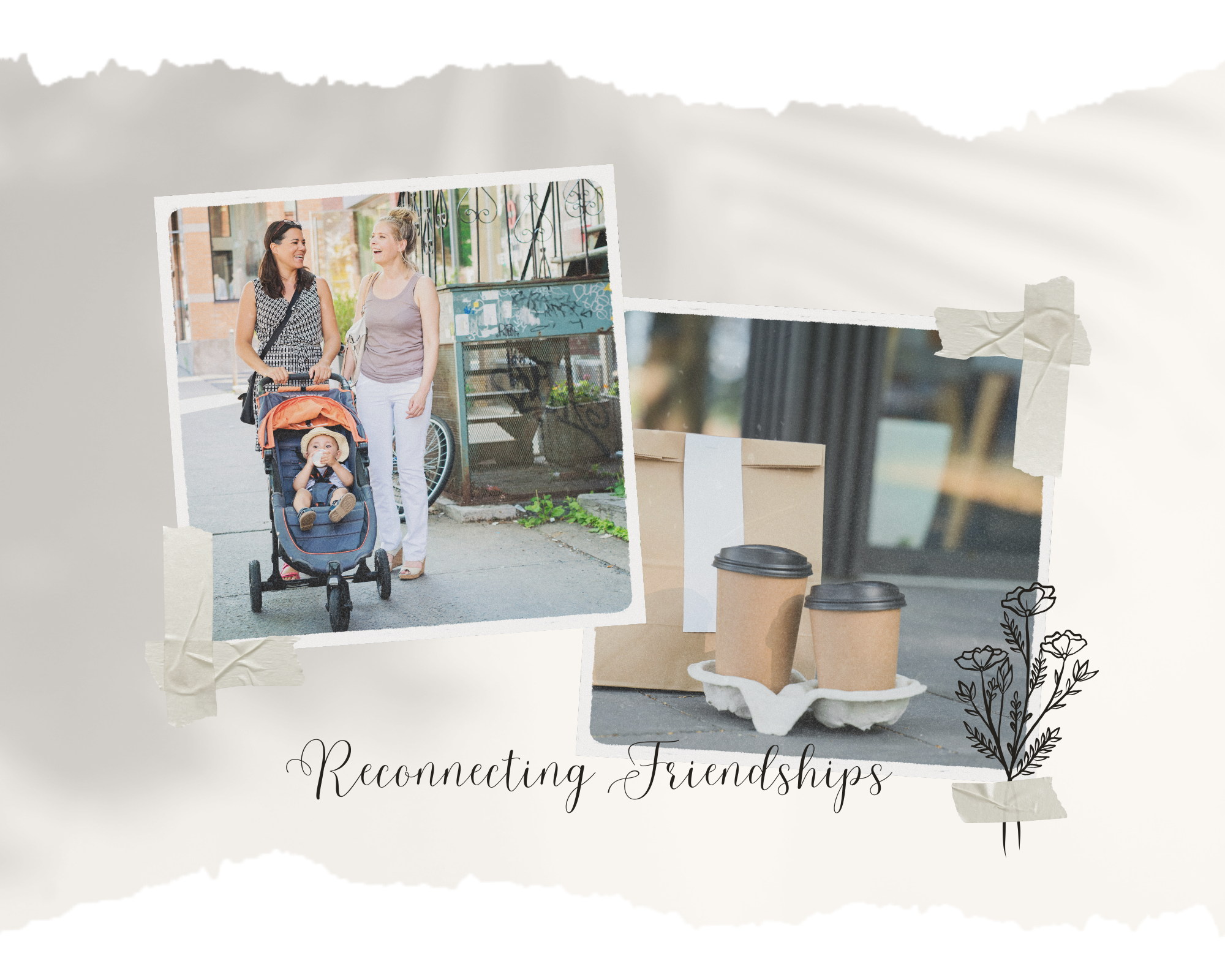
How to Reconnect After Distance
If you’ve drifted apart and want to reconnect, start small and simple.
Send a text that says, “I’ve been thinking about you.”
Drop off a coffee at her doorstep.
Send a funny meme or an old photo.
You don’t have to fix everything in one conversation. Just start.
Friendships are built on small gestures. The quiet, consistent reminders that say, “Hey, you still matter to me.”
What Therapy Can Teach Us About changing Friendships after having a baby
Since I’m a therapist, I can’t help but throw this part in (you knew it was coming). These friendship shifts aren’t just emotional, they’re developmental.
Motherhood is a massive identity shift. It changes how you see yourself, your priorities, your boundaries, and your emotional bandwidth. In therapy, we often talk about this as role transition, moving from one version of yourself to another.
So if your friendships feel off, that’s not failure. It’s adjustment. You’re both learning new roles, and that takes time.
Therapy can help new moms navigate guilt, loneliness, and overwhelm, but it can also help friends process feelings of loss and confusion. Sometimes, understanding what’s really happening beneath the surface brings so much relief.
For the Childfree Friend
If you’re the friend without kids, therapy can also be a place to unpack the complicated feelings that come with this shift: the grief, the guilt, and maybe even the resentment you didn’t expect to feel.
You might be thinking:
“I should just be happy for her, right?”
“Why do I feel jealous or replaced?”
“Am I a bad friend for missing what we used to have?”
You’re not a bad friend, you’re a human being experiencing change. Therapy can give you language for that grief, tools for maintaining connection, and space to explore how your identity fits into this new dynamic.
It can also help you learn how to show up for your friend without losing yourself. You don’t have to morph into a second parent or disappear altogether, there’s room for middle ground. Sometimes, it’s as simple as learning how to stay close while honoring that both of you are growing in different directions.
Friendships can evolve and stay meaningful. Therapy can help both sides navigate that evolution with empathy instead of guilt, connection instead of comparison.
Final Thoughts on friendships after having a baby
True friendship doesn’t end when motherhood begins, it evolves.
It becomes quieter, slower, softer. But also, in many ways, deeper. Because now your friendship holds something new: grace.
Grace for the tired texts that never got sent. Grace for the missed brunches and late replies. Grace for both of you doing your best in a world that keeps changing.
So whether you’re the new mom or the friend cheering from the sidelines, stay soft, stay curious, and keep reaching out.
You might not talk every day anymore, but that doesn’t mean the love disappeared. It’s just growing up right alongside you.
If you’re struggling to navigate changing friendships in motherhood, you don’t have to do it alone. Schedule a consultation to get support, clarity, and a space that’s just for you.