Journaling and Meditation: How These Practices Change You

Journaling and meditation are two of the most commonly recommended tools in therapy, and also two of the most misunderstood. They sound simple. Almost too simple. Write your thoughts down. Sit quietly. Breathe. And yet, when practiced consistently and intentionally, practicing these can create profound shifts in emotional awareness, nervous system regulation, and the way we relate to ourselves.
If you’ve ever tried journaling only to stare at a blank page, or attempted meditation and felt like your mind immediately rebelled, you’re not alone. Most people aren’t doing it “wrong,” they just haven’t been shown how these practices actually work or how to use them in a way that feels grounded, realistic, and supportive rather than performative or overwhelming.
This will walk you through why therapists so often recommend journaling and meditation, what changes they can create internally, and how to begin in a way that feels accessible. We’ll keep it practical, human, and real. No incense required.
Why Therapists Recommend Journaling and Meditation So Often
There’s a reason journaling and meditation come up again and again in therapy sessions. These practices slow things down enough for insight to happen. They create space between stimulus and response between what happens to us and how we react.
Journaling helps externalize internal experiences. When thoughts stay in your head, they tend to loop, escalate, and blur together. Writing them down gives them shape and boundaries. It moves information from emotional processing into cognitive processing, which can reduce intensity and increase clarity.
Meditation, on the other hand, supports awareness without action. Instead of fixing, analyzing, or judging, meditation invites observation. It teaches the nervous system that it’s possible to feel something without immediately reacting to it. Over time, this builds emotional tolerance and flexibility.
Together, they strengthen insight, self-trust, and regulation. Three things many people are craving without realizing it.
How Journaling and Meditation Affect the Brain
From a neurological perspective, journaling and meditation support integration between different areas of the brain. Journaling engages the prefrontal cortex (the part responsible for reasoning, reflection, and meaning-making), while also allowing emotional material from the limbic system to be processed safely.
Meditation helps calm the stress response by activating the parasympathetic nervous system. Regular practice has been associated with decreased emotional reactivity, improved focus, and increased capacity to sit with discomfort without being overtaken by it.
In simpler terms: journaling helps you understand what you’re feeling. Meditation helps you stay with what you’re feeling. Both are essential for meaningful change.
The Change Journaling and Meditation Can Create Over Time
People often expect this practice to produce immediate relief. Sometimes they do, but more often, the change is subtle and cumulative.
Over time, these practices can help you:
Notice patterns in thoughts, behaviors, and relationships
Increase emotional literacy (naming what you feel more accurately)
Reduce impulsive reactions
Build trust in your inner experience
Feel more grounded during stress
The biggest shift many people notice isn’t feeling “better” all the time, it’s feeling more aware and less hijacked by their internal world.
It is also an additional tool you can do almost anywhere, when you get the hang of it.
That awareness is where choice begins.
Getting Started with Journaling (Without Overthinking It)
You don’t need a fancy notebook, perfect handwriting, or a specific mood to start journaling. You need honesty and permission to write badly. (You can barely even read what I write, so bad writing and bad hand writing is welcome).
A few grounding guidelines:
Write for a short, set amount of time (5–10 minutes is plenty)
Don’t worry about grammar, structure, or sounding insightful
Let the writing be for you, not something to reread or share
Stop before you feel depleted
Journaling isn’t about producing something, it’s about processing something.
Basic Journaling Techniques to Try
Stream-of-consciousness journaling:
Set a timer and write whatever comes to mind without pausing. This is especially helpful for mental clutter and emotional release. (This is my personal fave. Almost every day I start out with, wow yesterday was… or this week has been… and just see what comes).
Emotion-focused journaling:
Start with one feeling and explore it. Where do you feel it in your body? When did it show up? What does it want you to know?
Situational journaling:
Write about a recent interaction or experience what stuck with you. Focus on what you felt, not just what happened.
These approaches are intentionally simple. Their power comes from consistency, not complexity.
Gentle Journaling Prompts to Begin With
If staring at a blank page feels intimidating, try starting with questions like:
What feels heavy right now?
What am I avoiding thinking about?
What do I need more of lately?
What am I proud of myself for today?
What’s taking up the most emotional space for me?
What’s literally something I can’t stop thinking about?
These questions open the door without forcing you to walk all the way through it.
What Meditation Actually Is (and Isn’t)
Meditation is often misunderstood as “clearing your mind” or achieving a calm, peaceful state. In reality, meditation is about noticing thoughts, sensations, and emotions without trying to change them.
You don’t need silence. You don’t need stillness. You don’t need a blank mind. You need curiosity and a willingness to stay.
If your mind wanders, that’s not failure. That’s the practice.
A Simple Meditation Practice to Start With
Try this for 3–5 minutes:
Sit comfortably and bring your attention to your breath. Notice where you feel it most: your chest, your nose, your belly. When your mind drifts (and it will), gently return to the breath without judgment.
That’s it.
No fixing. No forcing. Just noticing and returning.
Over time, this repetition teaches your nervous system that it’s safe to slow down.
If you need something to guide or prompt you, that is totally fine! There’s literally no wrong way to do it.
If music helps you settle into meditation, I’ve created a Spotify and Apple Music playlist you can use during your practice. Feel free to listen while journaling, breathing, or simply slowing down.
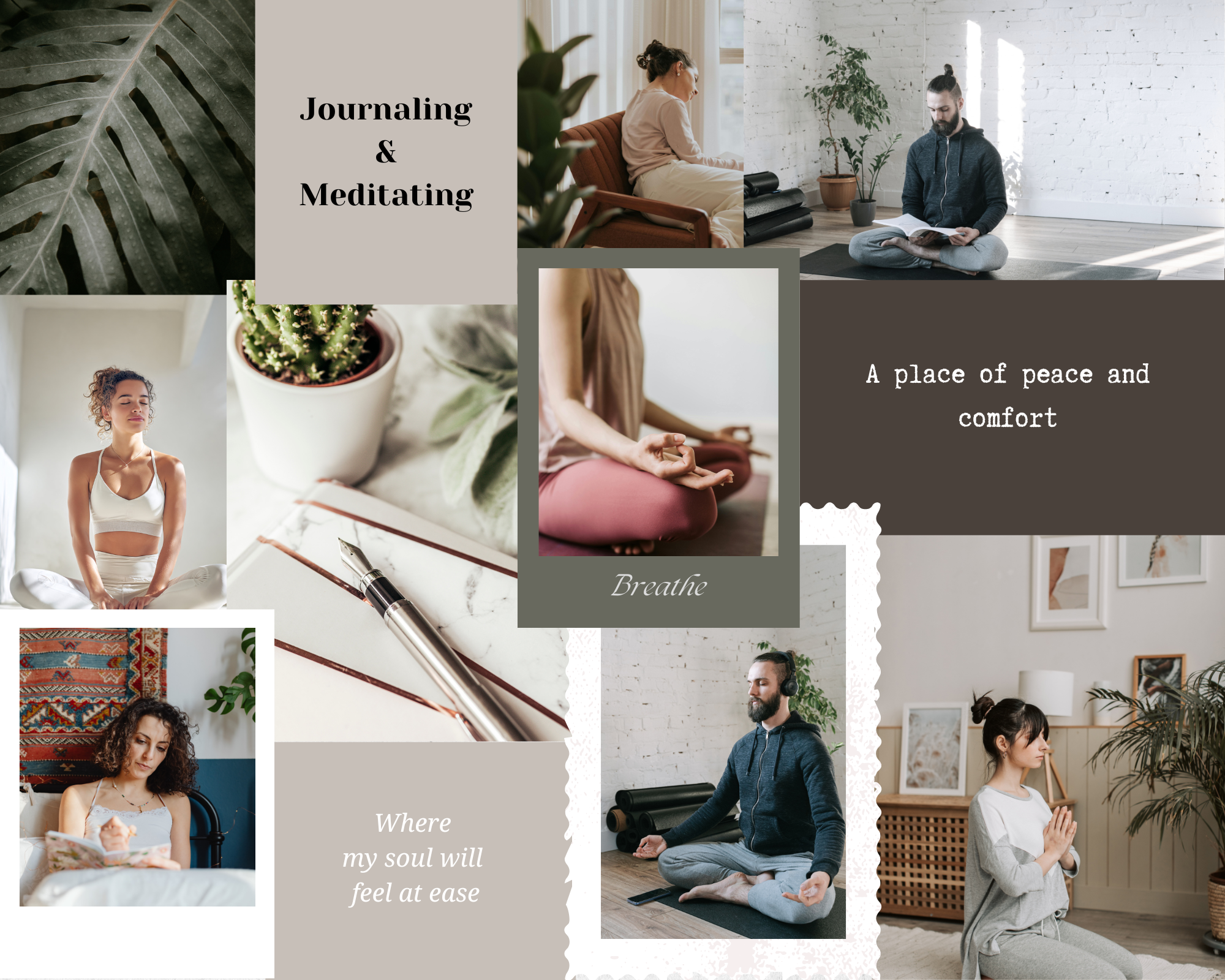
Combining both for Deeper Insight
Many people find that journaling and meditation work best when paired together. Meditation can help surface awareness, while journaling helps organize and reflect on what comes up.
You might meditate for a few minutes, then journal about what you noticed. Or journal first to unload thoughts, then meditate to settle your system.
There’s no “right” order, only what feels supportive.
Why Basic Practices Often Lead to Deeper Work
Simple journal and meditation techniques often uncover deeper questions about identity, boundaries, attachment, patterns, and unmet needs. That’s not a sign you’re doing too much. It’s a sign the practices are working.
This is also where many people benefit from more structured guidance, deeper prompts, or therapeutic support. Surface-level reflection opens the door. Deeper inquiry walks you through it.
If you’ve ever felt like you’re circling the same issues without resolution, that’s usually not a motivation problem, it’s a depth problem.
It is also soooo helpful when you bring these thoughts into therapy, or use therapy.
When to Go Deeper (and Why It Matters)
As awareness grows, so does the opportunity for meaningful change. Deeper practices can help uncover core beliefs, relational patterns, and emotional wounds that basic prompts don’t always reach.
That kind of work requires intention, safety, and pacing, which is why many people choose guided or structured resources when they’re ready to go further.
This blog is meant to introduce and orient you. The deeper work is where transformation tends to happen.
Final Thoughts
Journaling and meditation aren’t about becoming calmer, more positive, or more productive. They’re about becoming more honest with yourself and more compassionate toward what you find.
You don’t have to do them perfectly. You just have to begin.
And if you find yourself wanting more depth, more structure, or more insight, that curiosity is worth listening to.
It usually means something important is ready to be explored.
If this post resonated and you’re craving deeper guidance, I share more in-depth journal and meditation prompts monthly on my Substack. Subscribers receive thoughtfully designed practices that go beyond surface reflection and help you get to the core. You can subscribe here.
And if you’re ready to move from insight to action, you’re welcome to schedule a free consultation. It’s a chance to explore what you’re carrying and whether therapy or coaching support is the right next step.